
 20 Oct 2026
 7 min read

Planning a corporate event in Poland from another country can leave your team managing venue questions, supplier updates and last-minute changes across time zones. The right event planning services make those responsibilities clear: your team keeps decisions tied to business goals, while an event partner coordinates the work you choose to delegate.
Set the event strategy before you delegate
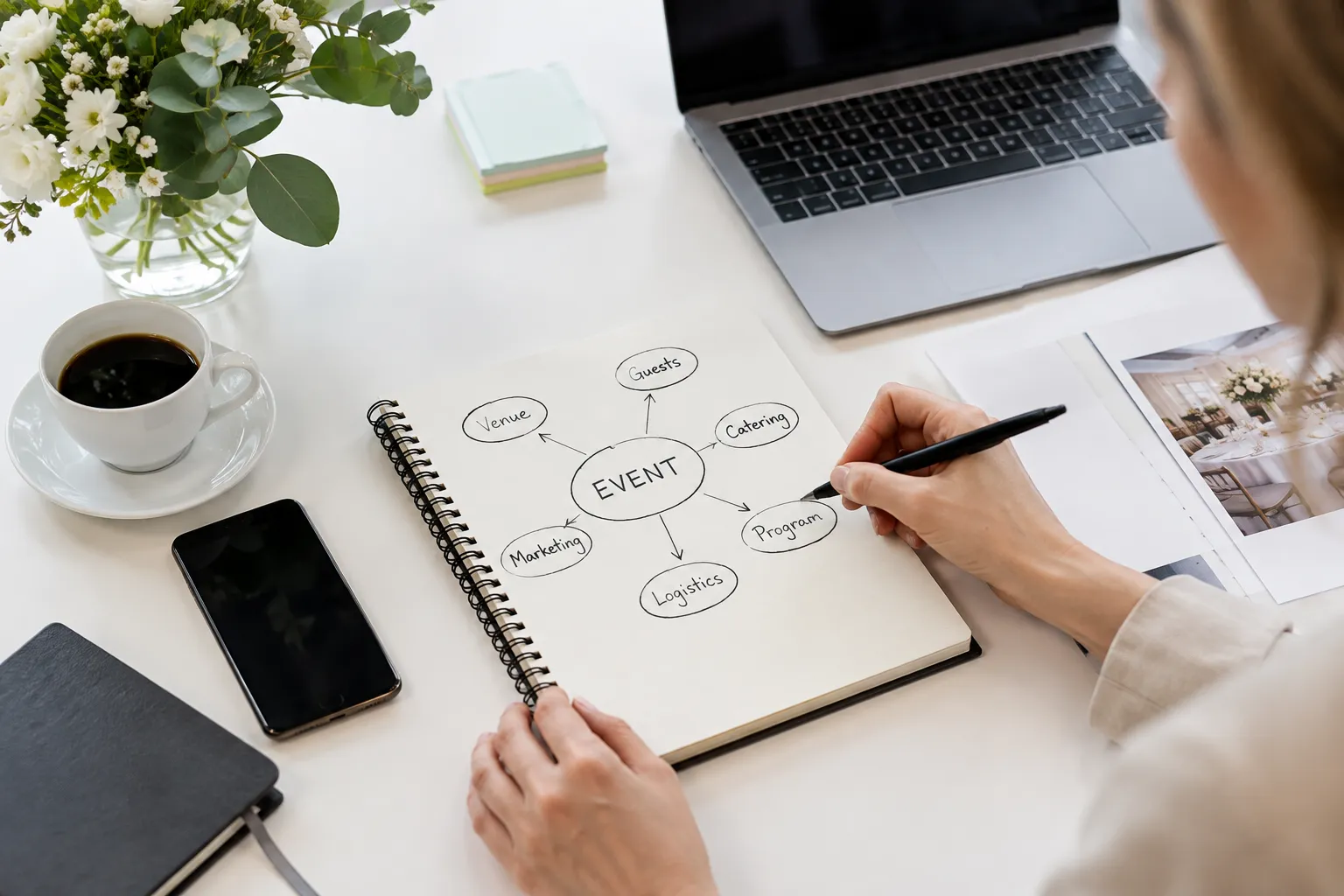
Before comparing event planners’ services, agree on what the event needs to do. A market-entry launch may introduce your company to prospective partners, while a business dinner may be designed to deepen a smaller set of relationships. A conference, gala or internal gathering will each need different priorities.
Write down the decisions your team should own:
- The business goal and audience
- The event format and key message
- The budget boundaries and who approves changes
- The decisions that need internal sign-off
- The measures you will use to review the event afterward
These guardrails help an event agency turn a broad brief into a workable plan. For example, “build awareness in Poland” needs more detail before it can guide venue selection, invitations or the run of show. Decide which audiences matter, what you want them to understand, and what next step would be useful after the event.
Then identify the work your team can realistically manage. You may want to keep control of the message and guest priorities while delegating venue research, supplier communication and on-site coordination. A useful event production scope can help clarify which responsibilities to assign and which approvals to retain.
A list of services offered by event planners is only a starting point: the useful question is which services fit your event and where your team needs support. Ask prospective partners to map their proposed event management services to your objectives, deliverables and approval process. This makes it easier to compare proposals on responsibility and follow-through, not just on a broad service label.
Delegate logistics that depend on local coordination

Logistics can take up a surprising share of an internal team’s attention, especially when the event is in a country where the company has limited local presence. Venue research, schedules, supplier communication, transport arrangements and access details all need an owner and a clear route for decisions.
Imagine an international company planning a partner gathering in Poland. The internal team may set the guest priorities and approve the event format, while a local team researches suitable venues, coordinates supplier questions and keeps the planning schedule current. The division of work should be agreed in writing; local support does not remove the need for timely decisions from the client.
When reviewing event planning services, ask which logistics are included, who communicates with each supplier, and how changes are recorded. “We’ll coordinate the venue” can mean different things. Does it include gathering requirements, arranging site visits, confirming arrangements and sharing updates with your team? Get the expected tasks and handoffs spelled out.
For a practical starting point, see our guide to Planning a business event in Poland. It can help you frame the local questions to bring into an agency conversation.
Where a Poland-based team can reduce coordination
An on-the-ground team can be useful when the planning requires in-person venue coordination or regular communication with local suppliers. It can also provide a shared point of contact for a team working across time zones. Agree on working language, response expectations and who can approve decisions before planning gets busy.
For a Poland event, discuss venue requirements early: capacity, format, accessibility needs, technical setup and the timing of access for suppliers. Ask the planner how these requirements will be confirmed with the venue and how any changes will reach your internal decision-makers.
The same principle applies to transport and schedules. If guests are arriving from different locations, agree who will communicate travel and arrival information, and who will handle questions. Do not assume these tasks are covered simply because an agency is coordinating other logistics.
Keep control of the guest experience

Delegating guest administration does not mean handing over the relationship. Your team should set the audience priorities, decide who should be invited and approve the tone of the invitation. A planner can then help coordinate invitations, registration, attendee updates and check-in according to those choices.
This division is particularly useful for a market-entry event or partner gathering. Internal leaders may know which organizations and roles are strategically relevant; an external team can help organize the practical work around the guest journey. If you need to understand how those responsibilities can be divided, read about event planner services in Poland.
Set the guest-management process before invitations go out:
- Decide who approves the invitation list and wording.
- Agree how registration details will be collected and who can access them.
- Set a process for late changes, special requests and attendee questions.
- Confirm who owns check-in and where unresolved issues go on event day.
- Decide what follow-up, if any, should happen after the event.
These details help avoid a common handoff problem: the agency assumes the client will answer guest questions, while the client expects the agency to respond. Assign an owner to each communication channel and clarify which questions need internal approval. If guest research or event PR may support the event’s purpose, discuss those needs separately rather than assuming they are automatically part of guest management.
Delegate production while keeping creative approval

Production brings the approved plan to life. Depending on the format and scope, that may involve coordinating staging, audiovisual requirements, branding, catering and the run of show. These tasks often rely on clear communication between the client, venue and suppliers.
Your team can retain approval over the message, brand use, creative direction and final program. The planner can coordinate approved requirements and flag choices that need a decision. To make that work, share relevant brand guidance and identify one person—or a defined approval group—with authority to give feedback.
Ask how production updates will be handled. For example:
- What will be documented in the event schedule?
- Who checks that supplier requirements match the approved plan?
- How are late changes submitted, assessed and approved?
- Who is the on-site contact for each issue?
- What happens if a key decision-maker is unavailable?
This is where broad event planners’ services become practical event management services: the value is not only arranging separate tasks, but making ownership and handoffs visible. For a conference, the questions may focus on program timing and audiovisual coordination. For a gala or business dinner, the client may place more emphasis on the guest experience, service timing and atmosphere. The format should determine the production plan, not a generic checklist.
Review results and agree what happens next
Evaluation starts before the event, when you define what you want to learn. Choose measures that reflect the purpose: for example, whether priority guests attended, whether the program ran as planned, or what feedback participants shared. Avoid relying on a single measure to represent the whole event.
Afterward, review the plan against what happened. Gather relevant attendee feedback, note changes that affected delivery, and check where supplier communication or internal approvals worked well or caused delays. If you tracked a budget, compare the agreed scope and approvals with the final records.
A short debrief can answer practical questions:
- Which responsibilities should remain with the internal team?
- Which tasks should be delegated next time?
- Were decision owners and approval deadlines clear?
- What should change in the guest or supplier communication process?
- What follow-up is still needed for the event’s business purpose?
Use the answers to adjust the next brief. Your team may want an agency to manage most logistics but keep guest selection and messaging in-house. Or you may need support with a specific area, such as guest research and event PR. The right division of work is the one that gives each responsibility a clear owner and fits your company’s capacity.
Event Planning Services FAQ
What kind of events do event planners plan?
Event planners support many formats, including corporate launches, conferences, congresses, galas, business dinners and partner events. The event’s purpose, audience and scope determine which services are relevant.
How do I find and assess vendors for a corporate event?
Start with a clear brief, then compare vendors on relevant experience, proposed scope, communication, responsibilities and approval processes. Ask who will coordinate them and how changes will be documented.
What should I look for when choosing an event planning agency in Poland?
Look for a clear division of responsibilities, a communication plan suited to your team, and practical answers about local coordination. Ask how the agency will handle changes, approvals and on-site issues.
How much of the event budget should I allocate to planning and coordination?
There is no single allocation that suits every event; scope, format and the responsibilities delegated all affect the planning work. Ask for a proposal that separates fees, included tasks and possible additional costs.
What should an event planning services agreement include?
It should define the scope, deliverables, responsibilities, approval process, schedule, communication method and how changes are handled. Confirm how fees and any additional costs are documented before work begins.
How early should I book an event planning team?
Start once the event purpose, likely date and broad scope are clear, especially if the format depends on venue availability or multiple suppliers. Ask the agency what decisions need to happen first.
Can an event planner coordinate a corporate event in Poland in English?
Yes, an agency serving international companies can coordinate planning in English with a local team in Poland. Confirm the working language for supplier communication, guest-facing materials and event-day coordination.
How can I tell whether an event planning team is the right fit for my company?
Ask the team to explain how it would divide responsibilities for your event, manage changes and report progress. A useful fit is one whose proposed process matches your internal capacity and approval needs.
Plan Your Poland Event
Share your event purpose, audience and the responsibilities you want to delegate. We can help you shape a practical scope for a market-entry event in Poland.


Agnieszka brings nearly 20 years of experience in marketing, communications and event management. At EVERITUM, she combines strategic brand thinking with practical event expertise to help international companies connect with their audiences in Poland through conferences, corporate galas and launch events. An Executive MBA graduate of WSB Merito in Poznań, she places clear communication, personal responsibility and lasting relationships at the heart of every project.