
 19 Oct 2026
 9 min read
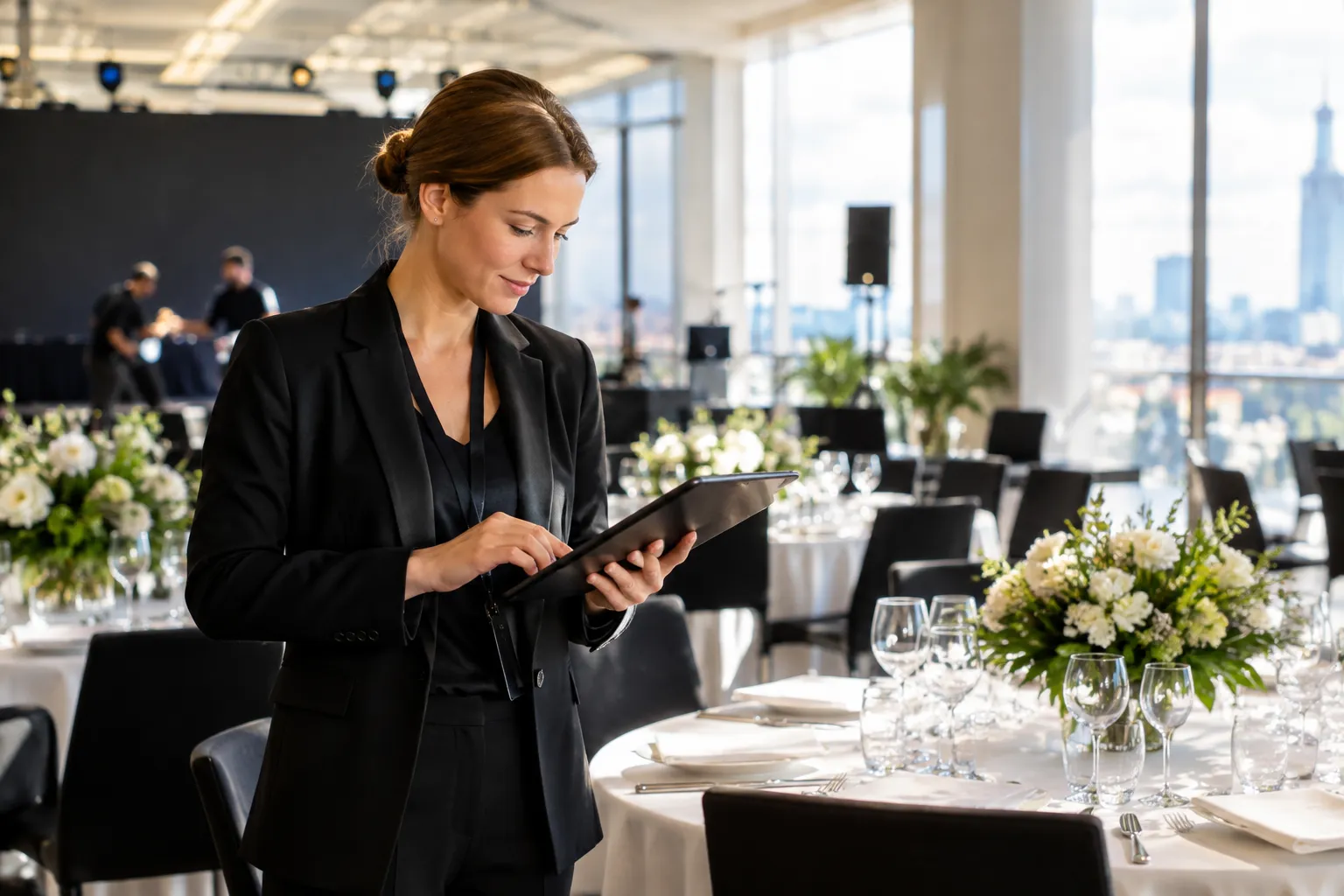
Event planners services cover the work of turning a company’s event goals into a coordinated plan: defining the brief, sourcing a venue, aligning suppliers, communicating with guests, and managing delivery. For a U.S. company hosting an event in Poland, the right scope can also include local coordination and English-language updates for internal stakeholders.
The exact division of work varies. A planner may lead the full process or take responsibility for selected stages, so agree on deliverables, approvals, and communication before planning begins.
What event planners services cover for corporate events

Corporate event planning connects the purpose of an event with the practical decisions needed to deliver it. Event management services may include planning, supplier coordination, guest communications, and on-site operations—but not every event needs every service.
For example, a market-entry launch may need local venue coordination and guest research, while a conference may need a detailed program and production plan. A corporate event formats overview can help you consider which kind of event fits your goals.
Turning the brief into an event plan
A useful brief gives the planner enough context to recommend a workable scope. Start with the event’s purpose: are you introducing a company to the Polish market, thanking partners, sharing information, or bringing a business community together?
Then clarify:
- Who should attend, and what do they need from the event?
- What format and atmosphere are appropriate?
- Where and when should it take place?
- What accessibility, language, brand, or dietary requirements should be considered?
- Who approves the plan, and who can authorize changes?
These answers guide decisions about the venue, program, guest experience, and resources. If the objective or audience shifts, the plan may need to change too. Ask how revisions will be documented, costed, and approved rather than assuming the original scope will cover them.
Venue, suppliers, and event production
Venue sourcing is more than finding a room with enough capacity. A planner can compare options against the event format, location, guest journey, technical needs, schedule, and budget parameters. For a site visit that your U.S. team cannot attend, clarify who checks the space and how findings will be shared.
Depending on the brief, suppliers may include catering, audiovisual production, staging, décor, or other event services. Ask the planner to distinguish between what they coordinate and what they provide directly. Confirm who requests proposals, reviews requirements, tracks decisions, and manages supplier updates.
A Warsaw event agency is one local option to explore when the event is in the capital. If you are considering another Polish city, ask prospective planners what on-the-ground coverage they can arrange there.
Guest communications and event-day delivery
Guest communications can include invitation planning, registration details, reminders, schedule updates, and practical information such as arrival instructions. The planner and client should agree on who owns the guest list, who approves the wording, and who answers attendee questions.
On the event day, the agreed scope may cover supplier arrivals, setup checks, schedule coordination, speaker or host support, and issue escalation. Ask who will be on site, how the client can reach them, and who has authority to make operational decisions.
Guest research and event PR may be relevant when an event is intended to bring a specific business audience together or support a market entry. They are not automatic requirements: decide whether they serve the event objective before adding them to the scope.
How corporate event planning moves from brief to delivery

Planning is easier to oversee when decisions, deadlines, and responsibilities are visible. A shared schedule should show what needs approval, who owns each action, and what depends on another decision.
Agreeing objectives, scope, and budget
First align on the outcome the event is meant to support and the work the planner is being asked to handle. Set out the expected deliverables, key dates, budget boundaries, and client responsibilities. If the budget is still being developed, say so and agree how options will be assessed.
Name a decision-maker and a backup contact. Without clear approval ownership, a small change—such as a revised guest estimate or program—can stall while multiple stakeholders weigh in. Ask how the planner will present choices and record approvals.
Building the schedule and confirming suppliers
Once the scope is agreed, the planner can map major decisions and dependencies: venue selection, supplier proposals, program development, guest communications, and production details. The schedule should identify deadlines for both the planning team and the client.
For each important milestone, confirm the expected output. For instance, “review venue options” is clearer when it includes what information the client will receive and when a decision is needed. A timeline is a working document, not a guarantee that requirements will never change; updates should be logged and shared with the people affected.
Managing changes and event-day operations
Changes can affect several parts of the plan at once. A revised attendance estimate may influence seating, catering, registration, and production. Agree in advance how the planner flags the impact, proposes options, and waits for approval where needed.
Before the event, confirm the run of show, contact list, arrival and setup schedule, escalation route, and client decision-maker on site. Ask what happens if a supplier is delayed or a program item changes. The aim is not to predict every problem, but to make responsibilities and responses clear.
What U.S. companies should delegate to a Poland-based team

A local team can take on tasks that benefit from direct coordination in Poland, while your internal team retains decisions tied to company strategy, brand, and budget authority. The right boundary depends on how much time and local capacity your staff can commit.
For further planning context, browse guidance on planning a business event in Poland.
Local venue and supplier coordination
Consider delegating venue research, site visits, supplier communication, and schedule coordination when your U.S. team cannot easily manage those tasks in person. A local planner can gather information and surface practical questions, while your team makes decisions about priorities and approvals.
Be specific about what “coordination” means. Does the planner arrange meetings, compare proposals, track confirmations, or oversee setup? Ask how updates will be shared and what evidence of a decision or booking you will receive.
English-language communication and approvals
An English-speaking planning team can help U.S. stakeholders follow the plan while coordinating with local partners. Agree on the working language for meetings, documents, supplier communication, and event-day instructions.
Set a regular check-in rhythm that suits the project, and decide how urgent questions will be handled between meetings. A brief written update should make it easy to see completed work, open decisions, upcoming deadlines, and any risks that need attention. This helps prevent the client from having to chase for basic status information.
Client decisions that should stay in-house
The planner can organize options, but your company should retain decisions that require internal authority or knowledge. These commonly include:
- The event’s business objective and priority audience
- Brand positioning, messaging, and final content approval
- Guest priorities and sensitive relationship considerations
- The budget ceiling and final authorization
- Internal stakeholder alignment and sign-off
Share these decisions early and identify who can make them. Delegation works best when the planner has room to manage agreed tasks but does not have to guess what the company considers acceptable.
Choosing an event planning partner in Poland

Compare planners by the work they will actually take responsibility for, not just by the breadth of a service list. A good evaluation checks relevant experience, communication habits, scope, and local delivery arrangements.
Relevant corporate event experience
Ask whether the planner has worked with formats and requirements similar to yours: a launch, partner gathering, business dinner, gala, conference, or congress. The purpose is to understand how they approach your needs, not to assume that one event type automatically proves fit for another.
Ask for a proposed approach to your audience, venue needs, production requirements, and planning timeline. If guest research or event PR is relevant, ask how it would connect to the event’s purpose and who would approve the audience or messaging.
Scope, communication, and accountability
Request a clear description of included work, exclusions, client responsibilities, and any assumptions that could affect the plan. Confirm who your day-to-day contact is, how often you will receive updates, and how decisions or changes will be recorded.
Before appointing a planner, ask:
- What are the first planning milestones after appointment?
- When will we receive the initial schedule?
- Who initiates check-ins and follows up on open decisions?
- How will changes to requirements be assessed and approved?
- What will we receive after each major planning stage?
Specific answers help you judge whether the working relationship will reduce your workload or leave you managing the process yourself.
Working with an on-the-ground team
Confirm where the planning team will be based for your event and who will be present during site visits, setup, and delivery. Ask whether the named contact will remain involved or whether responsibilities will pass to another person.
You can also clarify how local supplier communication will be managed, how the event-day team will contact your internal lead, and what coverage is included. These details matter when your company is coordinating across time zones and cannot oversee every local detail directly.
Plan your Poland event with a clear scope

Before speaking with a planner, write down the event objective, audience, preferred timing and location, known requirements, budget parameters, and internal decision-makers. Mark what is decided, what is still open, and what you would like the planner to recommend.
Then identify the work you want to hand over. You might need help with the full planning process, local coordination, guest research, event PR, or delivery on the day. You may also need a narrower scope if your team already owns the brief or guest communications.
A clear starting point makes it easier to compare proposals and agree on practical next steps. Keep the scope flexible enough to address changing requirements, but specific enough that both sides know who is responsible for each decision and action.
Event Planning FAQ
What services does an event planner provide?
An event planner can turn a brief into a coordinated event plan, including venue sourcing, supplier coordination, production, guest communications, and on-site delivery. The exact services depend on the agreed scope.
How much do event planning services cost for a corporate event in Poland?
The cost depends on the event’s format, scale, location, production needs, and the work assigned to the planner. Request an itemized scope that separates planning fees, supplier costs, and any assumptions.
How far in advance should we hire an event planner for a Poland event?
Hire a planner as soon as the event’s goals, approximate timing, and location are taking shape. Earlier involvement gives more room to assess options; a planner can also clarify what is feasible on a shorter timeline.
What should we include in a brief for a corporate event planner?
Include the objective, audience, preferred date and location, event format, budget parameters, brand requirements, known constraints, and decision-makers. Note which details are confirmed and which need the planner’s input.
Can a Poland-based event planner work with a U.S. company's internal team?
Yes. Agree on English-language documents and meetings, time-zone expectations, approval owners, update frequency, and an escalation route so local coordination and U.S. decisions stay connected.
How can we compare event planning proposals from different agencies?
Compare the proposed deliverables, exclusions, responsibilities, timeline, communication process, local coverage, and cost assumptions. Ask each agency to explain how it would handle changes and approvals.
What should we confirm about an event planner's insurance and contracts?
Review the contract’s scope, payment terms, cancellation provisions, responsibilities, and insurance details, and ask what coverage applies to the work. Consult a qualified legal or insurance professional about your specific situation.
Can an event planner help manage a hybrid or virtual component?
A planner may coordinate a hybrid or virtual component if it is included in the agreed scope. Ask who handles the platform, technical production, remote-speaker support, and attendee communications.
Recommended next steps
Gather your event objective, audience, timing, location preferences, budget parameters, and internal approval process. Decide which tasks your team can own and where local coordination would help.
When you discuss the project with a planning partner, ask for a written scope, a first-stage timeline, named responsibilities, and a clear process for updates and changes. These basics give both teams a practical starting point for planning an event in Poland.


Agnieszka brings nearly 20 years of experience in marketing, communications and event management. At EVERITUM, she combines strategic brand thinking with practical event expertise to help international companies connect with their audiences in Poland through conferences, corporate galas and launch events. An Executive MBA graduate of WSB Merito in Poznań, she places clear communication, personal responsibility and lasting relationships at the heart of every project.