
 3 Nov 2026
 12 min read
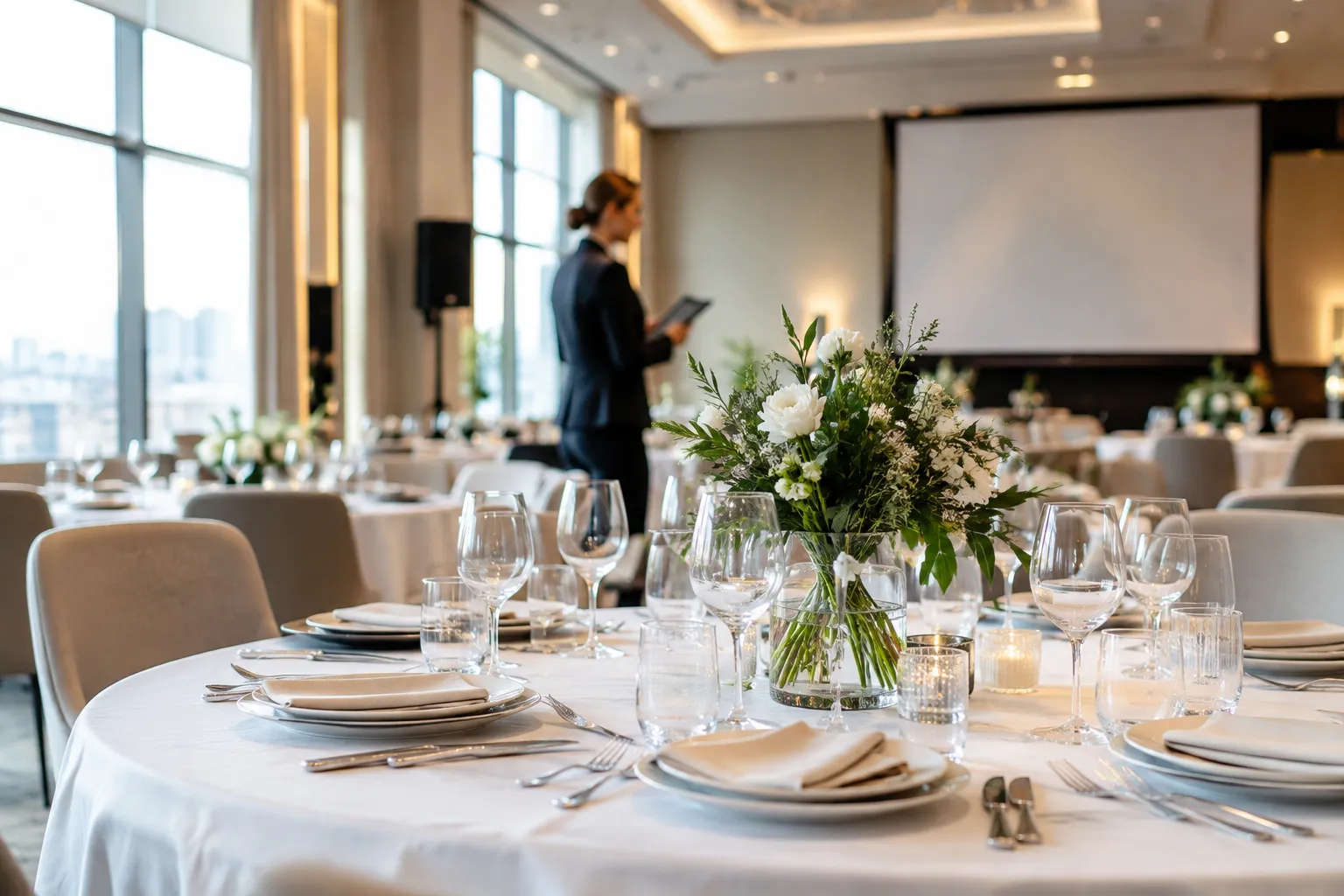
Corporate event planning services should make the brief, responsibilities, timeline and event-day delivery clear before work begins. For a Polish business event, compare not just what a planner proposes, but who will handle each decision and how changes will be managed.
What corporate event planning services should cover

A useful service scope connects your business objective to a workable event plan, then names who will deliver each part. Check whether the proposal covers strategy, suppliers, production, guest handling and on-site coordination—or only selected tasks.
The right level of support depends on your internal capacity. If your team can manage suppliers but needs help on the day, a coordination-only arrangement may fit. If nobody has time to drive decisions and chase updates, look for a clearly assigned lead and an end-to-end scope. Our guide to corporate event planning services explores how to think about handing work over.
When comparing corporate event planner services, ask for deliverables rather than broad promises such as “full planning”. The same label can cover different work across corporate event management companies and corporate event planning companies. Get a written description of what is included, when it happens and what remains with your team.
Event objectives, audience and format
Start by agreeing what the event is for, who needs to attend and what a useful result would look like. Those choices shape the format, programme, venue requirements and guest communications.
A market-entry launch, partner gathering, conference and business dinner have different planning needs. A launch may call for a clear introduction to the business and carefully considered guest outreach; a conference needs a structured programme and attendee journey. A dinner may centre on hosting and conversation. State the intended audience, key messages, preferred date range, likely guest numbers and any non-negotiable requirements in the brief.
Ask the planner to reflect these points back in the proposal. If the event has several audiences—for example, prospective partners and local stakeholders—ask how the format will give each group a reason to attend and a suitable way to take part. If the objective is still evolving, agree which decisions must be made first and who has authority to make them.
Venue sourcing and supplier coordination
Venue research is valuable when it tests the brief against practical constraints, not just appearance. Ask what criteria will guide the search, which options will be considered and who will check whether each venue can support the intended format.
Capacity is only one part of venue fit. Consider layout, accessibility, arrival arrangements, technical needs, timing and any restrictions that could affect the programme. For structures or equipment, establish who checks site suitability and how suppliers’ requirements will be coordinated. The HSE’s venue and site design guidance covers assessing venue suitability, site features, ground conditions and load-bearing capacity for event structures.
Supplier coordination should also be explicit. A proposal might include researching and briefing caterers, technical teams or other suppliers, but not their charges or contract management. Ask who obtains and compares supplier proposals, who approves them, who confirms delivery details and how conflicting requirements are resolved. For catering, clarify how guest dietary information will be collected and communicated to the provider.
Production, content and guest handling
Production and guest handling turn a plan into a joined-up experience, but the level of support varies. Check whether the service includes programme planning, technical coordination, registration, attendee communications and on-site staffing, or only advice on these areas.
For a conference or launch, ask how speakers, timings, room changes and technical requirements will be brought together. Who collects presentation materials? Who checks the running order with speakers? Who is the contact for a late change on event day? A proposal should make clear whether the planner will coordinate these tasks or whether your internal team remains responsible.
Guest handling can include invitations, registration, information before the event, arrival support and follow-up. These tasks matter especially when guests are travelling or when the event is intended to begin local business relationships. If you plan to use guest information for marketing after the event, agree what data will be collected, who can access it and how opt-outs will be respected. The Information Commissioner’s Office guidance on direct marketing explains relevant data-protection considerations, including lawful basis and opt-outs.
Planning a business event in Poland with an international team

For an overseas company, a suitable Poland-based planning partner should be able to coordinate local delivery while keeping decisions understandable to the wider team. Confirm the service area, working language, communication routine and ownership of decisions before you appoint anyone.
Local coordination can reduce the burden of managing multiple suppliers remotely, but it does not remove the need for clear approvals. Decide which choices the planner can make within the agreed scope and which need sign-off from your headquarters or local stakeholders. Ask how changes will be documented so that the current plan, budget assumptions and responsibilities remain visible to everyone involved.
Local venue and supplier knowledge
Local familiarity is most useful when it answers specific planning questions: which venues suit the format, what supplier information is needed and what practical constraints may affect delivery. Ask the planner to explain how venue options will be assessed against your brief, rather than relying on a shortlist without a clear rationale.
For a Poland market-entry event, venue, programme and guest mix need to support the purpose of the gathering. A launch designed to introduce a business locally may need a different setting and guest approach from an internal conference. EVERITUM offers market entry events in Poland; ask what parts of your particular brief the proposed scope would address.
Do not assume that “local” automatically means every task is included. Confirm who handles venue enquiries, supplier coordination, site checks, guest arrangements and event-day support. If the proposal depends on your team supplying local contacts or approvals, identify those requirements and deadlines in writing.
English-language coordination and stakeholder alignment
When an international team is involved, agree how planning decisions will be shared in English and who needs to approve them. A named point of contact, written action list and decision deadlines can make it easier to keep people aligned across teams.
Before signing, ask what regular updates will contain: open decisions, upcoming milestones, supplier questions and changes to the plan. Clarify who will contact you if a response is needed and how urgent issues will be escalated. If multiple departments have a say, nominate one person to consolidate feedback so that suppliers do not receive conflicting instructions.
A useful test is to ask the planner to describe the first few planning steps after appointment. Look for a clear sequence, a proposed time for the next planning conversation and a way to surface problems with possible solutions. These details help you judge whether the working process will relieve pressure or leave your team to chase progress.
Guest travel and event-day logistics
For guests travelling to Poland, decide whether the service includes travel information, arrival coordination, accommodation support or on-site assistance. These are separate tasks, so ask which are covered and who will handle any that are not.
Share the expected guest profile and likely arrival pattern early. Then check whether the proposed venue and schedule allow practical arrival, registration and movement between event elements. For event day, establish where guests can get help, who handles late arrivals and who can make decisions if timings change.
Ask what on-site staffing is included and for which hours or event phases. Clarify who leads setup, monitors the programme and coordinates breakdown. The HSE says organisers should coordinate work, communicate risks, ensure staff competence and monitor safety during setup, the event and breakdown in its guidance on managing an event. For an event in Poland, confirm applicable local requirements with suitably qualified professionals rather than assuming UK guidance governs the event.
How to compare event proposals beyond the headline fee

Compare proposals against the same brief and the same list of responsibilities. A lower headline fee may reflect a narrower scope, while a broader proposal may still leave important tasks or supplier costs outside the quoted work.
Use a simple comparison record before choosing. For each proposal, note the stated deliverables, exclusions, assumptions, client responsibilities, team structure and payment terms. If an item is unclear, ask for a written answer and an updated scope rather than relying on an informal conversation.
Match deliverables to your brief
Check that each proposal responds to the same objectives, audience, format and practical requirements. If one provider is pricing a conference with guest registration and another is pricing venue coordination alone, their fees do not represent like-for-like services.
Make a brief checklist to use with every corporate event planning company you approach:
- What is the event intended to achieve, and how does the proposed format support it?
- Which planning tasks will the provider complete?
- What guest, programme and production support is included?
- Who from your team must contribute, and when?
- What does the planner expect you to decide before work can proceed?
Then ask the provider to identify any part of the brief that is not covered. This is especially useful if requirements are still changing: separate confirmed needs from open decisions, and ask how a change to either would affect the scope.
Check inclusions, exclusions and assumptions
A proposal is easier to evaluate when it distinguishes planning fees from supplier charges and identifies work that may incur additional costs. Ask whether the quoted scope includes supplier research, venue visits, technical coordination, guest communications, registration and event-day staffing.
Check assumptions that can change the workload: event duration, guest numbers, number of planning meetings, languages needed and how many rounds of revisions are included. Confirm what happens if these assumptions change. Ask how supplier costs are approved and whether the provider will obtain your approval before making commitments on your behalf.
Do not treat an unclear exclusion as included. Request an updated proposal that specifies who will do the work, what it covers and how any additional work will be agreed. That step can expose a scope gap before you pay a deposit or rely on a task being handled.
Compare team structure and decision-making
Find out who leads your work, who will be present on the day and how decisions will be handled when that person is unavailable. The proposal should distinguish the main contact from any additional planning or on-site support.
Ask what communication rhythm the provider proposes, when the next planning meeting would take place and how actions will be tracked. Clarify who can approve suppliers, content, guest communications and changes to the budget. If your internal planner is already stretched, look closely at how much chasing, briefing and follow-up the proposal still leaves with them.
You can also ask how issues are raised: does the planner bring you a clear choice or a recommended response when a supplier or requirement changes? No process can prevent every disruption, but an agreed way to share options and secure decisions makes responsibilities more visible.
Confirm responsibilities, contingencies and success measures

Before committing, agree the timetable, approval route, change process and practical measures of success. A written record of who owns each task gives your team and the planner a shared reference as requirements evolve.
Delivery also involves event safety responsibilities. Organisers should establish who coordinates relevant work, communicates risks and monitors arrangements through setup, the event and breakdown, as described in the HSE guidance linked above. For your event, specify which party is responsible for each relevant planning task and how any specialist advice will be obtained.
Agree milestones, approvals and communication
Ask for a planning schedule that names decision dates as well as event milestones. A date for approving the venue, for example, is more useful when it also identifies who will review the options and how quickly a decision is needed.
Set a regular update rhythm suited to the event and your team. Each update can record completed actions, upcoming decisions, unresolved questions and the person responsible for each next step. If a decision is overdue, agree how the planner will flag its effect on the timeline or options.
Confirm the approval route for content, suppliers, guest communications and changes. If a director or regional team must sign off, identify that person early and plan around their availability. This makes it less likely that the planner will receive conflicting instructions or wait without knowing who can decide.
Clarify changes, cancellations and contingencies
Ask how the agreement handles changes to guest numbers, date, venue, programme or scope. Find out which changes can be handled within the agreed work, which require a revised proposal and who approves extra supplier commitments.
Discuss contingencies in practical terms. If a speaker cancels, a supplier cannot deliver or a key requirement changes, who identifies alternatives, who presents them and who makes the final decision? Ask what information the planner needs from you to act quickly and how new costs or timing effects will be confirmed.
For a deposit or staged payment, check what each payment covers and which work or commitments it relates to. Read the cancellation and postponement terms, including how supplier commitments are treated, before signing. If any term is unclear or could have legal or financial consequences, ask a qualified professional to review it for your circumstances.
Set practical measures of event success
Choose measures that match the event’s purpose and can be assessed in a useful way. A conference might track registrations, attendance and participation; a market-entry gathering might include follow-up conversations or agreed next steps, if those are relevant to your goals.
Be precise about what each measure means, who will collect it and when it will be reviewed. Registration is not the same as attendance, and attendance alone does not show whether guests engaged with the programme. If you want to understand guest views, decide how feedback will be collected and who will review it.
Avoid asking a planner to guarantee outcomes that depend on guest choices or wider business factors. Instead, agree what the planner controls—such as delivery tasks and communications—and what your team will assess after the event. This creates a fair basis for reviewing the work.
Corporate event planning services FAQ
These answers offer a starting point; the right service scope still depends on your event brief, location and responsibilities.
What does a corporate event planner do?
A corporate event planner turns a business brief into an event plan and may coordinate venues, suppliers, production, guest communications and on-site delivery. Confirm which of those corporate event planner services are actually included.
How much to charge for a corporate event?
There is no single fee for a corporate event; the scope, format, location, duration and supplier requirements all affect the cost. Compare written proposals with matching deliverables, exclusions and payment terms.
What are the 5 C's in event planning?
The 5 C’s are commonly described as concept, coordination, control, culmination and closeout. Treat them as a planning prompt, then ask a provider to map its actual deliverables and responsibilities to your event.
Who are some good corporate event planners in London?
Choose a planner whose experience and proposed scope fit your event, location and working needs; a London-based provider may not be the right fit for an event in Poland. Compare relevant proposals and confirm who will coordinate locally.
Who is the most famous event planner?
There is no single agreed answer, because fame depends on the audience and type of event. For a business event, compare relevant experience, clear responsibilities and the proposed working process rather than public recognition.
Prepare your next steps
Use these steps to turn a broad brief into a clear, comparable planning decision.
- Write down the event objective, audience, format, date range and non-negotiable requirements.
- Mark each planning task as provider-owned, internally owned or still undecided.
- Send the same brief and responsibility checklist to each provider you are considering.
- Compare written scopes, exclusions, payment terms, milestones and event-day staffing.
- Resolve unclear responsibilities and contingency terms before approving a proposal.
Discuss Your Poland Event
Share your event brief to explore a suitable scope, local coordination needs and practical next steps for your Poland business event.


Agnieszka brings nearly 20 years of experience in marketing, communications and event management. At EVERITUM, she combines strategic brand thinking with practical event expertise to help international companies connect with their audiences in Poland through conferences, corporate galas and launch events. An Executive MBA graduate of WSB Merito in Poznań, she places clear communication, personal responsibility and lasting relationships at the heart of every project.