
 1 Nov 2026
 10 min read

A business party planner should do more than book a venue and arrange catering. For a company celebration in Poland, the right partner can turn your brief into a workable plan, coordinate local delivery and keep your team informed as decisions and requirements change.
The key is to compare what each agency will actually take responsibility for: planning, supplier management, communication and event-day coordination. A clear scope and delivery process matter as much as a promising concept.
What a business party planner should handle
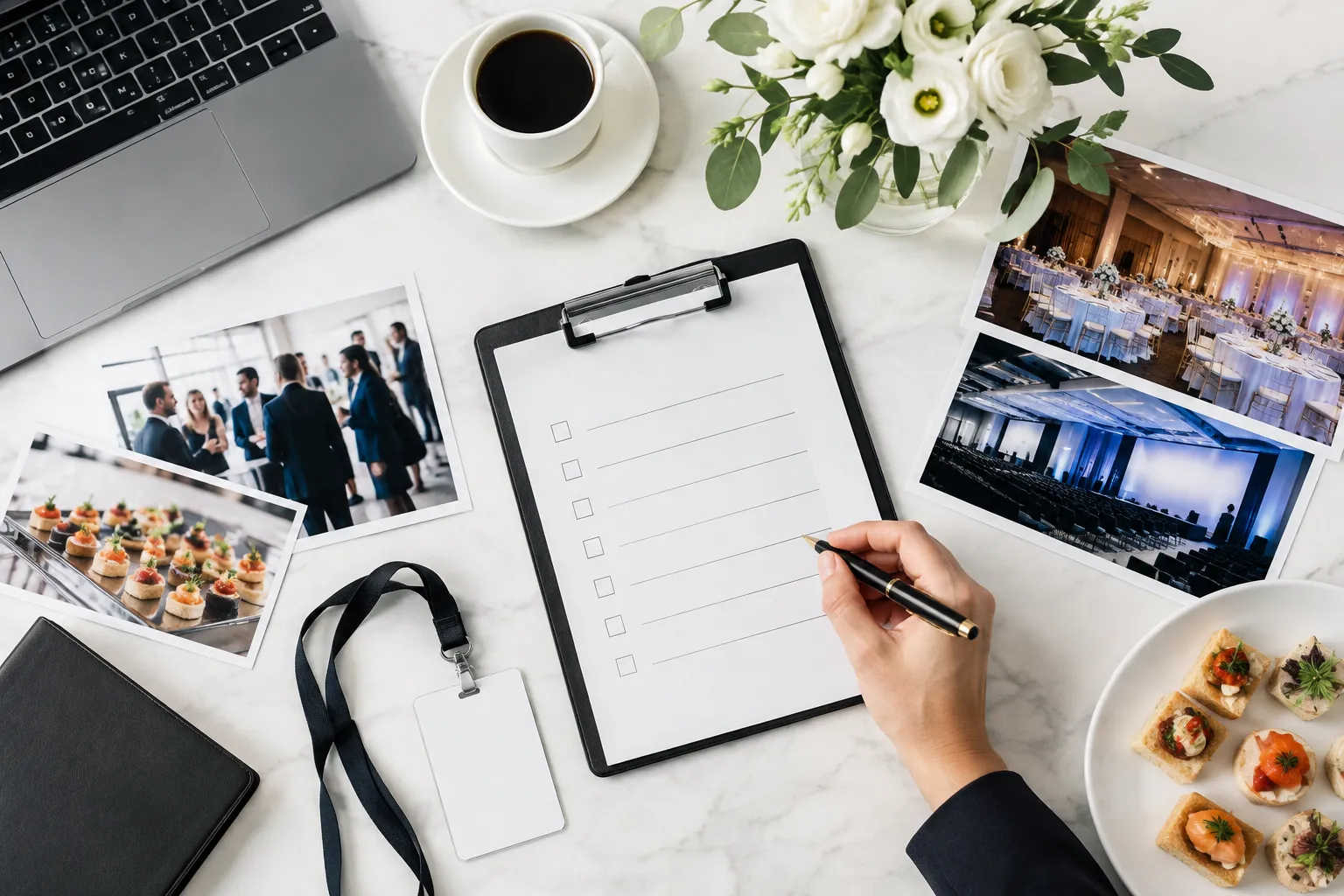
Before comparing event management companies, agree what you mean by “planning”. One agency may focus on creative ideas and recommendations; another may take responsibility for production and on-site delivery too. Neither model is automatically right for every event, but the difference should be clear before you appoint anyone.
When speaking with event planning agencies or companies for event management, ask who owns each task, who makes decisions and what your team will still need to do. If your celebration also supports a launch or wider market-entry activity, consider whether the planner’s experience fits that business purpose. Our guide to event planners for corporate events in Poland offers a broader view of choosing a corporate event partner.
From event brief to run of show
A useful brief should cover the purpose of the event, the guests, the approximate scale, the location, the budget boundaries and any known constraints. For an international company, it should also explain how the celebration fits into the company’s activity in Poland: is it intended to welcome partners, introduce the business to local contacts, thank a team or bring stakeholders together?
Ask the business party planner how they turn that brief into decisions and milestones. You might expect a sequence that includes refining the format, assessing venue options, agreeing the programme, confirming suppliers and preparing a run of show. The detail will depend on the event, but you should be able to understand what happens next and what input is needed from you.
The tradeoff is between flexibility and certainty. A detailed plan helps stakeholders see responsibilities and deadlines, while a plan that is too rigid may be difficult to adjust when the guest list, menu or programme changes. Ask how revisions are recorded, assessed and approved rather than assuming that every change can be absorbed without consequences.
Planning, production and on-site delivery
Planning covers the decisions that shape the event. Production translates those decisions into practical arrangements: schedules, venue coordination, technical requirements, staffing and supplier instructions. On-site delivery means having a named team to coordinate the plan as the event unfolds.
Some companies for event management offer only selected parts of this work. That can suit a team with in-house capacity and local knowledge. If you need to hand off the detail, confirm whether the proposal includes the production work and event-day staffing, or whether these are separate responsibilities.
A useful question is: “Who will be at the venue, what will they manage, and who should we contact if a decision is needed?” If the answer is unclear, ask for roles and escalation steps in writing.
Match the agency’s experience to your event

An agency’s portfolio is most helpful when it shows how its work relates to your event’s purpose and audience. A polished concept can be appealing, but it does not by itself tell you how the agency handles a corporate guest list, a formal programme or changing requirements.
Look for comparable audiences and objectives
Ask event planning agencies to discuss examples that resemble your event in meaningful ways. Similarity might mean the type of guests, the business objective, the formality of the occasion or the number of moving parts—not necessarily an identical theme or venue.
For a celebration connected to entering the Polish market, relevant experience may include welcoming local partners and international colleagues in one setting. Ask how the planner would account for different expectations around introductions, language, programme pacing and the balance between business and celebration. You are looking for a thoughtful explanation, not a promise about the effect the event will have on business relationships.
If the gathering is part of a broader launch, compare a party-focused brief with a more structured market entry event in Poland. The right format depends on what the event needs to do and which guests you want to bring together.
Check how the agency measures success
Agree what a well-delivered event means for your company before planning gets under way. Practical measures might include whether agreed programme elements happened as planned, whether guests could navigate the event comfortably and whether the gathering reflected the purpose set in the brief.
Ask the business party planner what they will review with you afterwards and what information they need to assess delivery. Some objectives, such as strengthening relationships, may not be captured by a simple event-day measure. Keep the evaluation proportionate: identify what you can observe, what you want guests to experience and which business aims are broader than the event itself.
Test local coordination in Poland
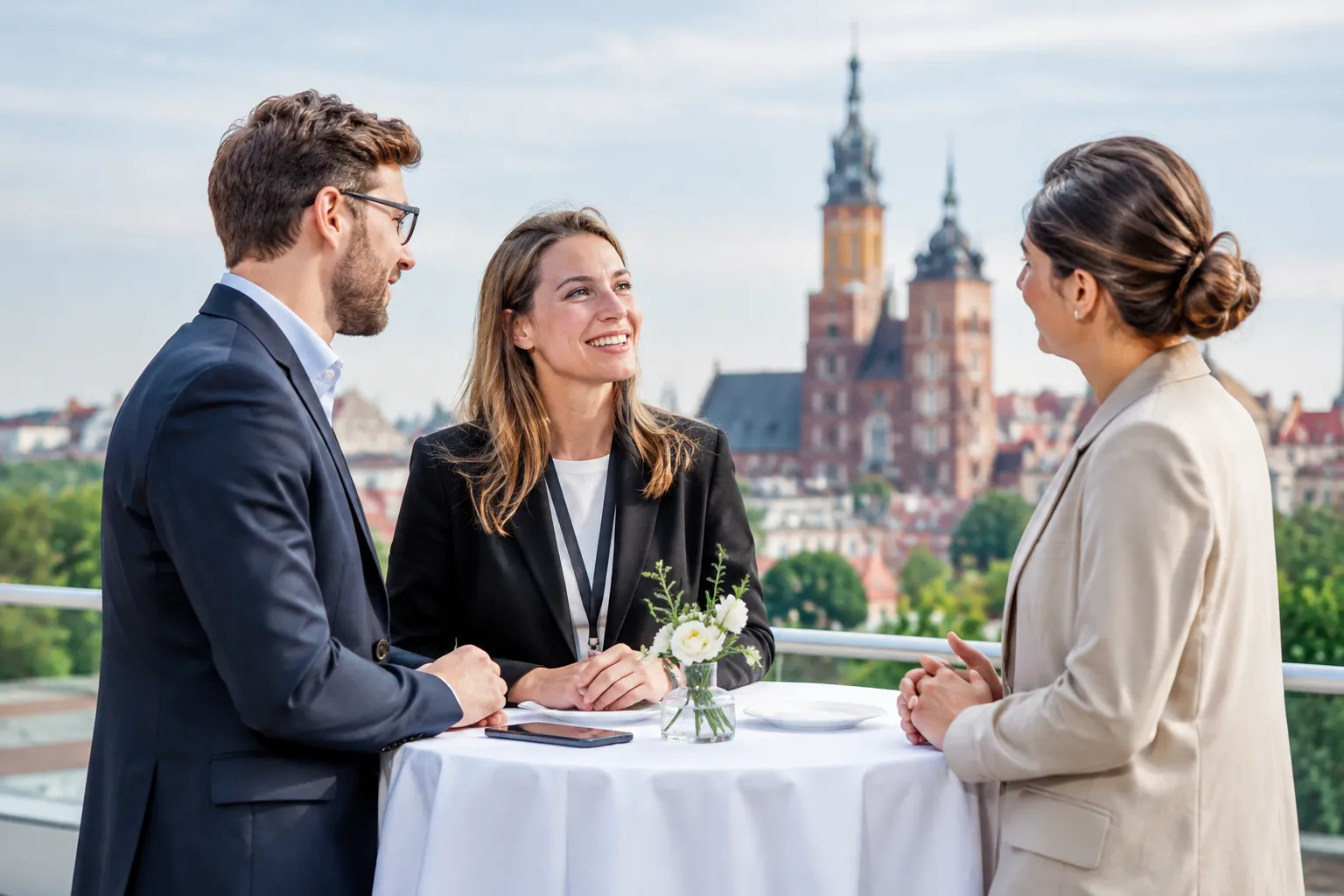
For an international team, local coordination is not just a question of knowing the city. It means someone can manage the practical work with venues and suppliers in Poland, explain options clearly to your team and bring the separate parts together against the agreed plan.
Ask who will manage local suppliers
Find out who will communicate with the venue, catering team, production partners and any entertainment providers. Ask how suppliers are briefed, who checks that their arrangements fit the run of show and who resolves conflicting information.
It is also worth clarifying whether the agency is recommending suppliers, coordinating suppliers selected by your company or managing the full supplier process. Each arrangement can work; the important point is to understand where the agency’s responsibility ends and yours begins.
A local contact can be especially useful when decisions need to be made on the ground. Ask who will be present during setup and the event, and whether that person is involved in planning or will be handed the plan shortly before delivery.
Confirm the plan for permits and contingencies
Ask the agency to identify which local requirements may apply to your proposed venue and activities, and who will check them. The planner should be clear about what they will investigate, what decisions remain with your company and whether any specialist input is needed.
Then discuss practical backups. If weather, a supplier delay or a change in the programme affects the plan, who proposes alternatives and how are they approved? A contingency plan does not need to anticipate every possibility. It should make likely pressure points visible and give your team a clear route for decisions.
Agree on English communication and decision-making

A local delivery team and an international client team need a shared way to exchange information. Before appointing an agency, check that the people leading your planning conversations can communicate clearly in English and can pass agreed details to the local delivery team.
Set one point of contact and approval flow
Agree on a lead contact for your company and a lead contact at the agency. Then map the people who need to approve the budget, guest communications, programme and other key decisions. Without this, the planner may receive conflicting instructions or wait for approval while deadlines approach.
Ask the agency to propose a meeting rhythm, a way to record decisions and expected response times. You should know when the next planning conversation will happen, what will be discussed and who is responsible for initiating it. This is a practical way to avoid a situation where your team has to repeatedly chase updates.
If a change comes in from a director or another stakeholder, establish how it will be assessed and communicated. The planner should be able to explain the consequences for timing, cost or guest experience before your team approves it.
Make budgets and updates easy to follow
Request updates that show the current budget position, upcoming decisions, deadlines and any changes to the plan. Ask how supplier costs and agency fees are presented, and how you will be told if an assumption changes.
A shared decision log or written status update can help everyone work from the same information. It is not about adding paperwork for its own sake: clear records make it easier to see what has been agreed and what still needs attention. For a launch with a communications element, discuss whether guest research or event PR should be part of the plan; these may support audience planning and event communications, but their scope should be explicit. See guest research and event PR in Poland for more on that area.
Compare proposals by scope, fees and risk

Do not compare proposals only by their headline totals or visual presentation. Compare what each agency is responsible for, what you must provide, and how changes and supplier commitments will be handled.
Separate included services from optional extras
Ask each agency to label what is included, what is optional and what is excluded. Check whether the fee covers creative development, venue coordination, supplier management, staffing, setup and on-site delivery. Also ask which tasks stay with your internal team, such as collecting approvals or supplying guest information.
A proposal with a narrower scope may be a good fit if your team can take on the remaining tasks. If your aim is to hand off the work, a low headline fee may not tell you how much internal coordination will still be required. Compare proposals against the same checklist so you can see that tradeoff.
Review payment terms and change handling
Before signing, read the payment schedule, cancellation terms and the process for approving changes. Clarify whether deposits or other payments are tied to supplier commitments, and who is responsible for confirming those commitments.
Ask what happens if the guest count, venue or programme changes. The agency should explain how it will flag potential cost or timing effects and obtain approval. If you need advice on contractual terms for your particular arrangement, consult a qualified professional.
Ask for a delivery plan, not just a concept
A proposal should help you picture how the event will be delivered, not only what it might look like. Ask for planning milestones, responsibilities, event-day roles and the process for handling decisions or problems. You do not need every operational detail at the proposal stage, but you should be able to see how the work will progress.
Use these questions to compare event management companies:
- What will your team handle, and what will ours handle?
- Who leads the work in Poland and who will be on site?
- When will we receive updates, and who initiates them?
- How are changes, costs and approvals recorded?
- What decisions do you need from us next?
If an agency cannot yet provide a complete delivery plan, ask what it can confirm now and when the remaining details will be agreed.
Protect the guest experience from arrival to farewell
A company celebration is experienced as a sequence, not a single programme. Consider what guests need before they arrive, how they find their way through the event and how they leave. A planner should be able to discuss that journey in relation to your audience and the purpose of the gathering.
Check the journey through the event
Review invitations and practical guest information alongside arrival, registration, wayfinding, programme flow and departure. Ask how the venue layout, timing and transitions will work for someone attending for the first time. If guests are travelling from abroad, discuss what information would make the visit easier to plan.
Also ask how accessibility needs will be gathered and passed to the relevant venue or suppliers. Confirm who will handle guest questions and how last-minute updates will reach attendees. These details can be easier to resolve when they are part of the plan from the beginning.
Discuss cultural and dietary needs early
Ask how the agency will collect relevant information from guests, including language preferences and dietary requirements, and when it needs that information. The planner should explain how requests will be shared with the catering and venue teams and how your company can review the options.
Avoid treating an international guest list as if everyone has the same expectations. Share what you know about the audience and ask the agency what further questions would help shape a welcoming event. If you are considering a formal dinner or gala rather than a more relaxed party, compare the format with the needs of your guests and the business purpose; corporate galas and business dinners may be a closer fit.
Business Party Planner FAQs
What is a fancy word for event planner?
An event manager or event producer may describe a broader delivery role, while “event planner” is a clear, widely understood term. For a company celebration, ask what responsibilities sit behind the title.
What's the difference between a party planner and an event planner?
A party planner usually focuses on celebrations, while an event planner may work across corporate and other event formats. Titles vary, so compare the actual planning, supplier coordination and delivery included.
Choose a partner who makes delivery clear
The right business party planner is the one whose scope fits your event and whose communication and local delivery plan your team can understand. Compare responsibilities, decision-making, change handling and the guest journey before choosing—not just the creative idea.
For a celebration that supports your company’s activity in Poland, a clear plan can help your internal team hand over the work with confidence. Discuss your event requirements with EVERITUM and explore what a market entry event in Poland could involve.


Agnieszka brings nearly 20 years of experience in marketing, communications and event management. At EVERITUM, she combines strategic brand thinking with practical event expertise to help international companies connect with their audiences in Poland through conferences, corporate galas and launch events. An Executive MBA graduate of WSB Merito in Poznań, she places clear communication, personal responsibility and lasting relationships at the heart of every project.