
 23 Oct 2026
 6 min read

Corporate event agencies can differ as much in how they coordinate a project as in the events they produce. For a launch, conference or gala in Poland, compare the scope each offers, who will deliver locally, and how you will track progress—not just the initial concept.
How corporate event agencies compare for events in Poland
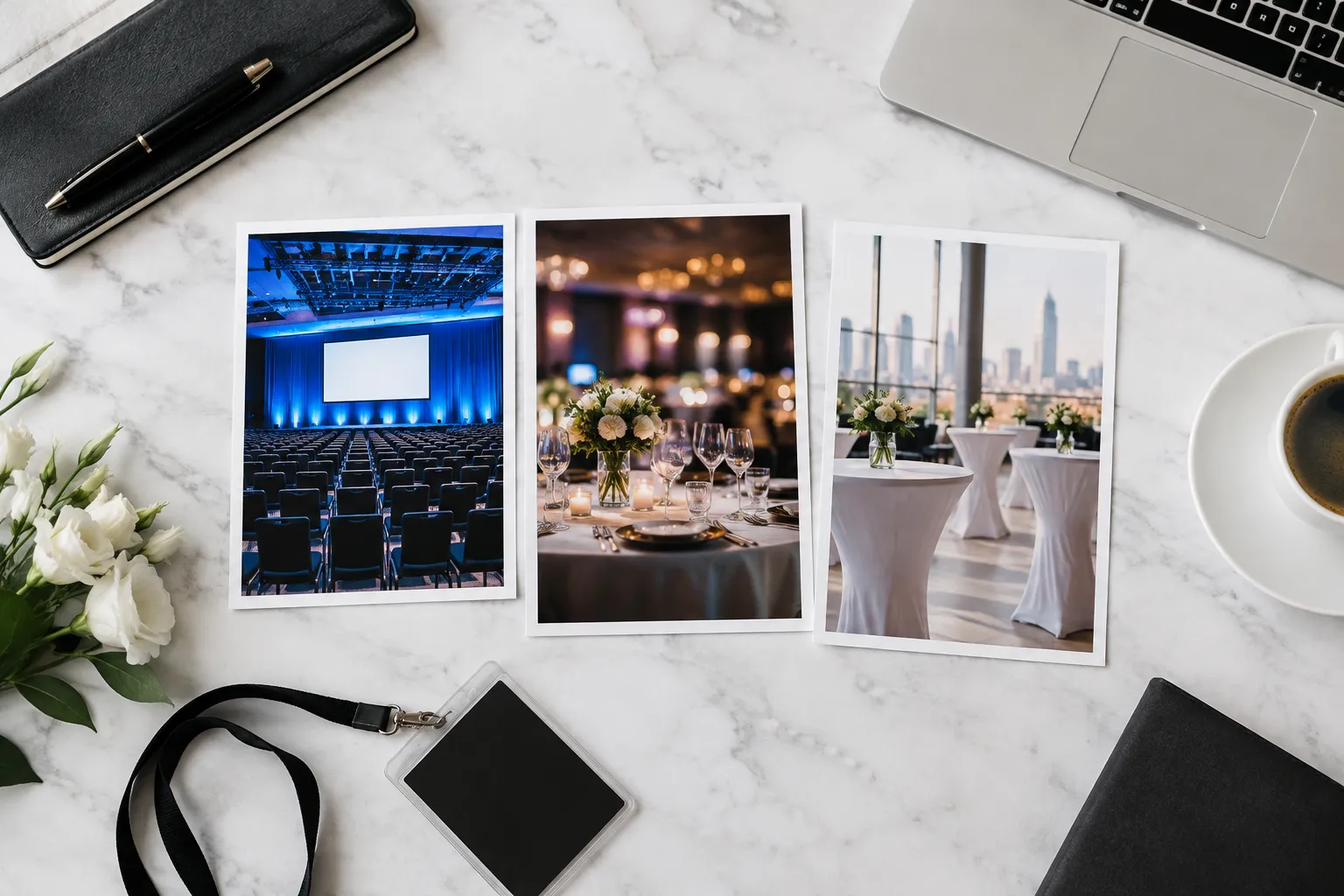
The label “agency” does not tell you exactly what is included. Some corporate event planning companies may focus on creative direction or a particular event format; others may coordinate a broader project. Use the same questions for every prospective corporate event planning service so you can compare fit rather than assumptions.
| Agency model | Event types it may suit | Local delivery to check | Communication and reporting to check | Potential trade-off |
|---|---|---|---|---|
| Broad-scope event agency | A brief combining several event formats or workstreams | Who handles local venues, suppliers and event-day coordination | Named contact, meeting rhythm, written timeline and decision log | A broad offer still needs to match your specific event and market |
| Format specialist | A defined event such as a conference, launch or gala | Whether the team can deliver in your chosen Polish location | How the specialist handles changes and reports risks | Relevant depth may come with a narrower scope |
| Remote-led agency with local partners | Planning led from another market, with delivery support in Poland | Who visits the venue, briefs suppliers and leads on site | How local updates reach your main planning contact | You may need to clarify who owns each local decision |
These are ways to assess a proposed delivery model, not guarantees about every provider in a category. Ask each agency to explain what it will take responsibility for, what your team must provide, and how it will handle changes. Our guide to choosing an event management company offers more Poland-focused questions for your shortlist.
What different agencies take on, from launches to galas

A corporate event planning service may cover planning, production, guest coordination and supplier liaison in different combinations. Ask for a written scope that names the work, responsibilities and hand-offs. You can also review business event case studies to understand how an agency presents relevant experience.
Launches and client events
Launches and client events often need a clear connection between the business message, guest experience and programme. Depending on the brief, planning may include shaping the event format, coordinating invitations and guest information, arranging the venue and managing suppliers.
For a Poland market-entry event, clarify how guest research and event PR fit into the plan, if they are needed. Ask what audience information the agency will gather, how it will be used and who approves communications. A launch-focused market entry events service may be relevant when the event is part of entering the Polish market.
Conferences and partner events
Conferences and partner events have more moving parts around the agenda: speakers, session timings, delegate logistics and production all need to connect. Ask who coordinates speaker information, manages schedule changes and keeps the venue and technical suppliers aligned.
A corporate event agency should be able to describe its proposed responsibilities in practical terms. For example, will it coordinate the run of show and on-site handovers, or will your internal team retain those tasks? Compare that answer with the level of support your team needs.
Galas and business dinners
Formal events bring together venue, hospitality, programme and guest coordination. The right scope depends on the format: a business dinner may need a different planning rhythm from a gala with a longer programme.
Ask how guest requirements, menu decisions, room set-up and event-day changes will be managed. For a formal corporate occasion, review whether galas and business dinners match the type of support you are considering.
How local teams deliver events across Poland
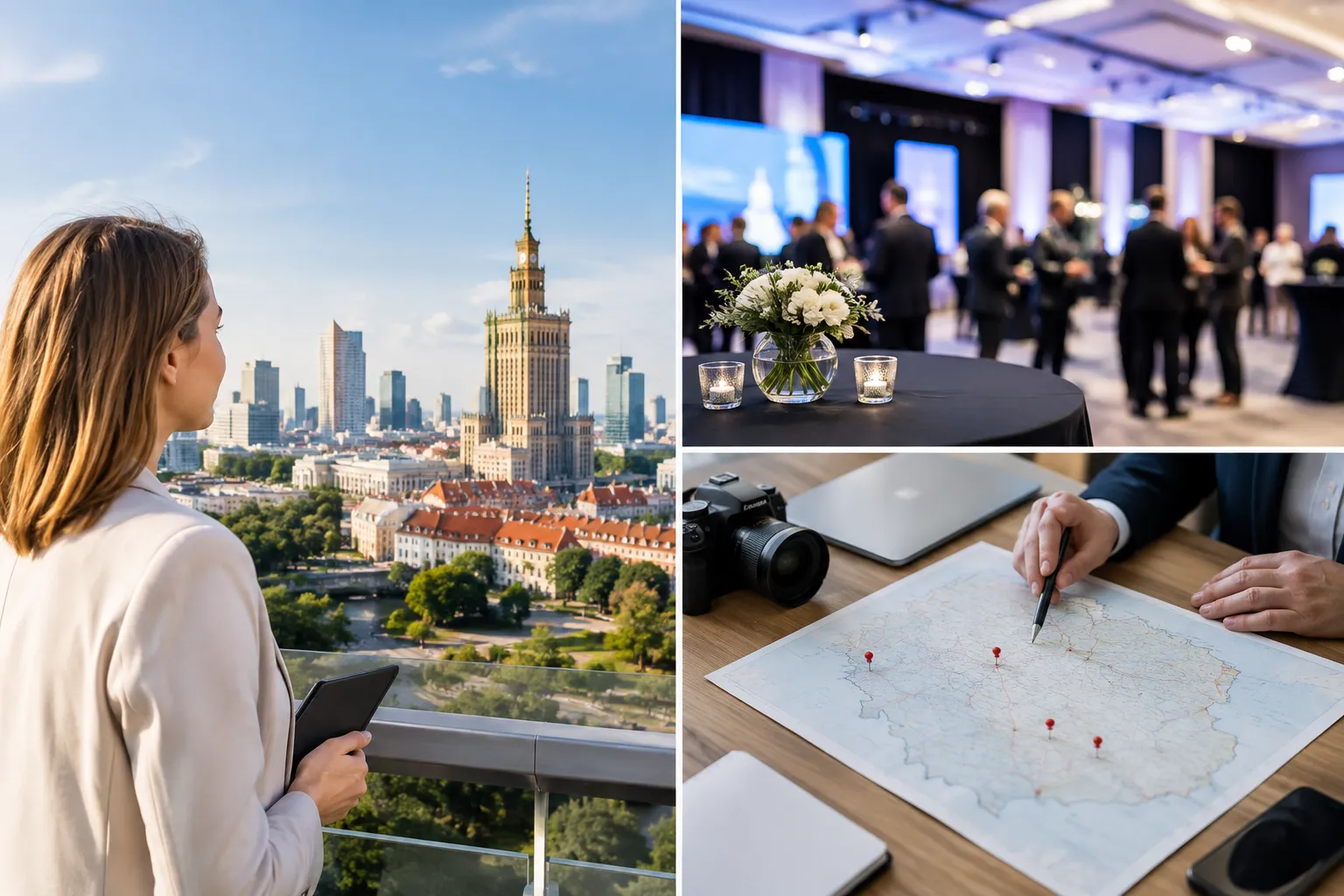
For an international organiser, a local team can be the point of coordination for venue discussions, supplier communication, site visits and live delivery. But “local” is only useful if you know who is doing what. Ask who will attend venue visits, who will brief suppliers, and who has authority to resolve operational questions on the day.
If your event supports a Polish subsidiary launch, use the Polish subsidiary launch event checklist to shape the brief. Confirm the city, venue status, languages needed and any decisions that still depend on colleagues in other markets. The more clearly you identify these dependencies, the easier it is to agree responsibilities and timings with corporate event management companies.
What to expect from progress updates and reporting
Regular updates should make the project easier to follow, not add another layer of administration. Before appointing an agency, agree how often you will meet, where decisions are recorded and who will contact whom between meetings.
A useful planning update can cover:
- Completed tasks and upcoming deadlines
- Decisions needed from your team, with a due date
- Budget status against the agreed plan
- Open questions, dependencies and risks
- Changes to the schedule, scope or guest requirements
- The person responsible for each next action
Ask for an example of the reporting format the agency would use for your project. Also clarify how it will raise a problem and propose options, rather than leaving your team to chase for updates or invent solutions.
Choose an agency that fits your brief and team
Use a short evaluation checklist to compare corporate event agencies on the same basis:
- Scope: Which planning and delivery tasks are included, and which remain with your team?
- Relevant fit: Has the agency described work that resembles your event format and audience?
- Local delivery: Who will coordinate in Poland, and who will lead on site?
- Communication: Who is your main contact, how often will you receive updates, and how are decisions documented?
- Change handling: How will the agency respond when requirements shift, and who approves the resulting decisions?
- Working relationship: What information and availability will the agency need from your internal team?
Ask each prospective partner to walk through your brief and identify the first decisions, likely dependencies and proposed planning rhythm. Choose the corporate event planning company whose responsibilities and communication approach best match your event and your team’s capacity—not simply the one with the broadest-sounding offer.
Corporate Event Agencies FAQ
When should we start looking for a corporate event agency?
Start once you can describe the event’s purpose, likely date and location, even if some details remain open. Earlier conversations give you more time to compare scope, availability and planning approaches.
What information should we include in an event brief?
Include the event purpose, audience, preferred date and location, format, expected attendance range, budget parameters, language needs and known constraints. Mark undecided items clearly so agencies can identify what needs confirmation.
Can an event agency work with our existing suppliers?
Yes, an agency can be asked to coordinate with suppliers you already use. Confirm who manages each supplier, how responsibilities are divided and who handles changes or delivery questions.
How involved does our internal team need to be during planning?
Your team will usually need to provide decisions, approvals and company information, but the agency’s scope determines the day-to-day workload. Agree named decision-makers and a regular update schedule before work begins.
Can one agency coordinate events in multiple Polish cities?
An agency may be able to coordinate events in multiple Polish cities, but confirm the proposed local staffing and supplier coordination for each location. Ask who will lead on site in each city.
What should we clarify about venue and supplier contracts?
Clarify who selects suppliers, who negotiates and signs contracts, what costs or terms require your approval, and who manages changes. Make sure responsibilities and payment arrangements are explicit before commitments are made.
How can we assess an agency’s experience with international attendees?
Ask how it plans for language requirements, guest communications, arrival information and coordination with international stakeholders. Request relevant examples and clarify which tasks the agency would own for your event.
What details should we agree on before an agency starts work?
Agree the scope, responsibilities, fees and payment terms, key dates, communication rhythm, approval process and how changes are handled. Record these in the written agreement and planning documents.
Talk through your Poland event
Share your event format, location, audience and planning needs with a local team. We can help you explore a practical scope for a market-entry event in Poland.


Agnieszka brings nearly 20 years of experience in marketing, communications and event management. At EVERITUM, she combines strategic brand thinking with practical event expertise to help international companies connect with their audiences in Poland through conferences, corporate galas and launch events. An Executive MBA graduate of WSB Merito in Poznań, she places clear communication, personal responsibility and lasting relationships at the heart of every project.