
 22 Oct 2026
 8 min read

A conference planner turns a company’s objectives and practical requirements into a coordinated event plan, then manages the moving parts through event day. That can include programme design, venue and supplier coordination, registration, speaker support and on-site delivery. For a corporate conference in Poland, a local planning partner can also help align the plan with the venue and suppliers on the ground.
What a conference planner takes from the initial brief

The first job is to understand what the company needs the conference to do, who it is for and what constraints shape the plan. The conference planner then turns those answers into decisions, responsibilities and timelines that the client can review.
For example, an international company preparing a conference in Warsaw may need to bring local partners and visiting colleagues together. The brief should clarify the purpose of the meeting, the intended audience, the preferred language, the likely format and the practical limits around date, location and budget. Those choices influence everything from the venue shortlist to the registration information.
Clarifying goals, audience and constraints
A useful brief starts with a clear objective. Is the conference primarily for sharing information, bringing business partners together, introducing a new initiative or creating space for discussion? The answer helps shape the programme and the experience attendees need.
The planner will also ask about:
- Who is expected to attend, and where are they travelling from?
- What dates or date ranges are possible?
- What budget parameters and approval steps should guide decisions?
- Are there language, accessibility, dietary or technical requirements to consider?
- Which details are confirmed, and which may still change?
An event planner for corporate events should make open questions visible rather than quietly treating assumptions as settled. Agreeing how updates will be handled, who approves decisions and when check-ins take place can give an overloaded internal organiser a clearer handover and reduce the need to chase progress.
Planner, internal organiser and suppliers: who does what
The planner coordinates the overall plan: they connect the brief to the programme, venue, supplier requirements, schedule and event-day responsibilities. The internal organiser provides company context, confirms priorities and makes or secures the decisions that belong to the business.
Individual suppliers deliver specialist parts of the event, such as catering, audiovisual equipment or staging. Their responsibilities should be clear, but those separate contributions still need to fit together. A conference planner helps coordinate that joined-up picture; they do not replace the client’s role in approving key choices or the suppliers’ responsibility for their own agreed work.
When comparing an event planner for corporate events, ask who will own the timeline, who will contact suppliers, how decisions will be recorded and how often you can expect updates. EVERITUM’s conferences and congresses in Poland page outlines its relevant service for companies planning business events in the country.
How the planner shapes the conference programme

A programme is more than a list of speakers. It needs to make sense for the audience and objectives, while allowing enough time for people to arrive, move between sessions, take breaks and speak with one another.
The planner works with the client to arrange sessions, introductions, breaks and transitions into a workable schedule. For a Poland-based corporate conference with visitors from abroad, that might mean checking how arrival times affect the opening, whether speakers need particular preparation time and how the day accommodates networking.
The planner can flag timing conflicts and help compare options, but the client should confirm the content priorities and which sessions matter most. A practical programme also identifies who is responsible for each transition, so the plan is usable by speakers, suppliers and event-day staff.
Choosing a venue and coordinating suppliers in Poland
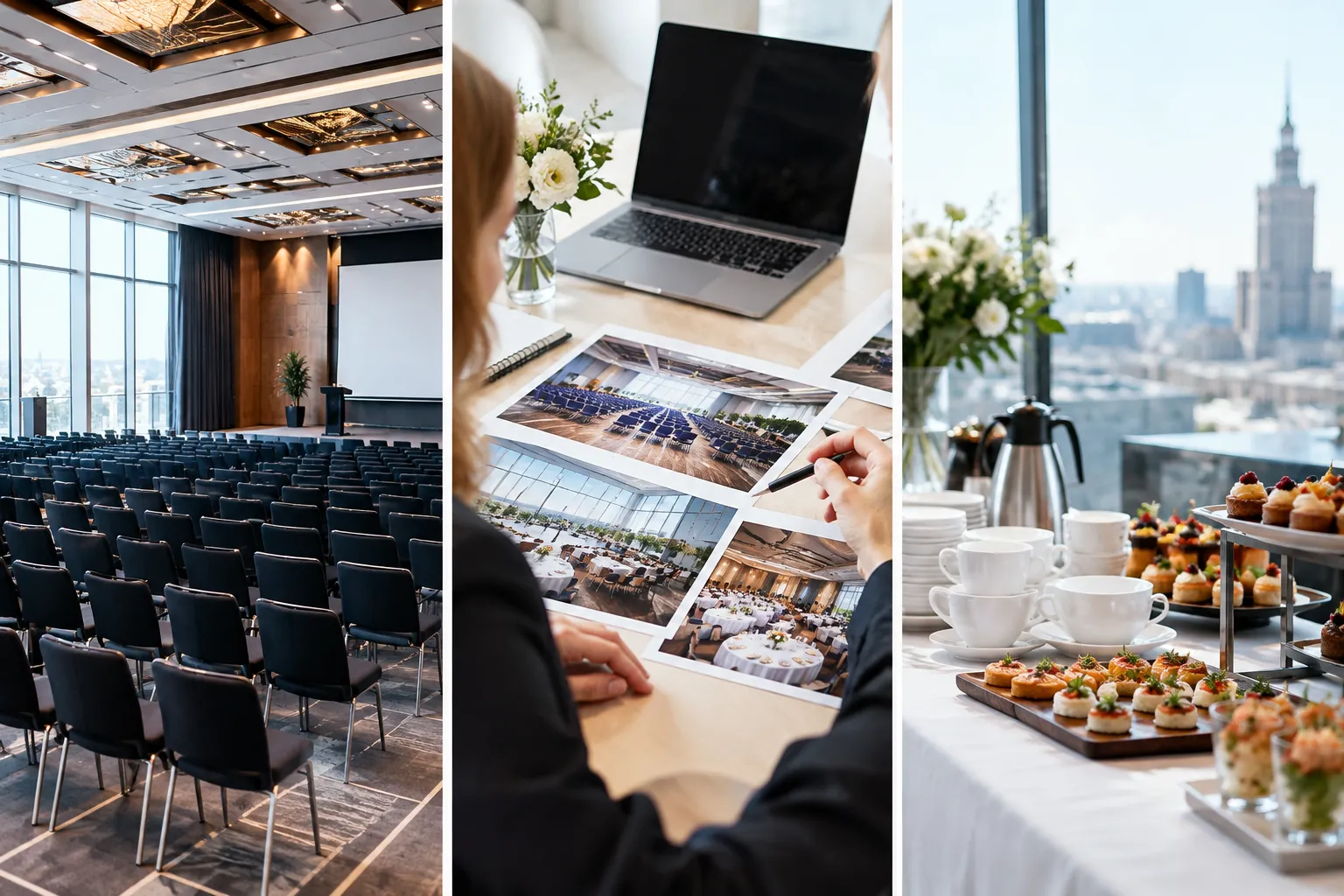
Venue and supplier decisions should follow the requirements agreed in the brief. A conference planner coordinates these pieces against the same event schedule, budget parameters and intended format, rather than treating each booking as a separate task.
For an international company organising a conference in Poland, local coordination can help connect venue arrangements with supplier timings and on-site requirements. If the event is also part of a wider market entry, market entry events in Poland may be relevant to consider alongside the conference plan.
Matching the venue to the event format
A venue shortlist should be assessed against practical needs, not appearance alone. The planner may help compare capacity, location, accessibility and technical requirements against the expected audience and programme.
Check whether the proposed room layout suits the sessions, whether there is space for registration and breaks, and what equipment or services the venue includes. Confirm how attendees will find the location and whether the schedule allows for travel between any separate event spaces. These questions help the client make an informed choice before details are locked in.
Aligning supplier plans and responsibilities
Catering, audiovisual support, staging and other suppliers need clear information about timings, access and responsibilities. The planner can coordinate what each supplier needs to know and when, then check that their plans fit the event schedule.
A shared working plan should make it straightforward to see who is responsible for setup, when deliveries or checks are expected, and who to contact if something changes. Ask how supplier updates will be shared and how any knock-on effect on timing or cost will be raised for approval.
Managing registration and supporting speakers
Registration and speaker coordination are practical workstreams that affect how prepared attendees and presenters feel before arriving. The planner can organise these tasks around the agreed programme and make it clear who handles questions or changes.
Registration and attendee communications
The registration process should collect the information the event team needs and give attendees clear, timely instructions. Depending on the agreed scope, the planner may coordinate registration details, attendee lists and pre-event messages with the client.
Communications can cover essential information such as the date, location, arrival instructions, programme updates and a contact route for questions. If requirements change, the team should agree who approves revised messages and how registered guests will be informed. For audience planning or communications support, see EVERITUM’s guest research and event PR in Poland.
Speaker preparation and session logistics
Speakers need to know when they are expected, where to go and what the session requires. A planner may coordinate timings, presentation materials, equipment needs and arrival arrangements, while the client confirms speaker content and any company-specific approvals.
Before the event, confirm who collects materials, what format is needed, whether slides require testing and who will support the speaker on site. A simple contact and timing plan helps prevent uncertainty when several sessions or speakers are involved.
What a conference planner manages on event day
On the day, the conference planner works from the agreed schedule and coordinates the people and tasks needed to keep the event moving. This can include checking the venue setup, confirming supplier readiness, supporting registration and keeping speakers informed about timings.
The planner also helps respond to changes. If a speaker is delayed or a session needs adjusting, the team can assess what else is affected, identify the decision-maker and communicate the agreed update. The internal organiser should know how issues will be escalated and when they need to approve a change.
Before event day, ask how many planning contacts will be present, what their responsibilities are and how they will communicate with your team. A clear staffing and escalation plan makes it easier to hand over day-to-day coordination without losing sight of decisions that still need client input.
Prepare your brief before choosing a planning partner
You do not need every detail settled before speaking with a conference planner. A starting brief can be short, as long as it distinguishes firm requirements from open questions.
Gather:
- The conference purpose and the audience you want to bring together
- Possible dates, preferred Polish location and expected format
- Known budget parameters and the approval process
- Language, accessibility, dietary or technical considerations
- Any confirmed speakers, partners or programme elements
- The support you need, the decisions you will retain and how you prefer to receive updates
When comparing options, ask for a proposed planning process, key milestones, responsibilities and a communication rhythm. You can also ask how changes are documented and how proposed solutions are presented when requirements shift. Those questions help you judge whether the working relationship will provide the structure and follow-through your team needs.
Conference Planner FAQ
How far in advance should I hire a conference planner?
Hire a conference planner as soon as the event has a clear purpose and a likely date or date range. More lead time can give the team room to compare venues, coordinate suppliers and prepare the programme.
What information should I prepare before asking for a planning proposal?
Share the event purpose, audience, possible dates, location preferences, budget parameters and known requirements. Note what is confirmed, what may change and which tasks you want the planner to coordinate.
Does a conference planner manage the event budget?
A conference planner can organise budget information and coordinate decisions against agreed parameters, depending on the scope. The company should confirm approval limits and who authorises spending before planning begins.
Can a conference planner arrange attendee travel and accommodation?
Some planners may coordinate travel or accommodation as part of an agreed scope, while others may not. Ask which arrangements are included and who will communicate directly with attendees.
Can a conference planner coordinate a hybrid conference?
A conference planner can help coordinate the programme, venue and relevant technical requirements for a hybrid format if that work is within the agreed scope. Confirm who supplies and operates the online components.
How does a conference planner handle last-minute changes?
A conference planner should assess what the change affects, identify any decisions requiring approval and share the updated plan with relevant people. Agree in advance how urgent issues and approvals will be handled.
What should be included in a conference run of show?
A run of show should list timings, sessions, transitions, responsible people and relevant supplier or technical cues. It should also identify who communicates updates if the schedule changes.
How can a company assess whether its conference was successful?
Assess the conference against objectives agreed before planning, using relevant feedback and practical indicators such as whether the intended programme was delivered. Decide in advance what information the team will collect and review.
Plan Your Conference
Bring your event goals, audience and open questions to a conversation about planning support for a conference in Poland. We can help you clarify the next steps and the coordination your team needs.


Agnieszka brings nearly 20 years of experience in marketing, communications and event management. At EVERITUM, she combines strategic brand thinking with practical event expertise to help international companies connect with their audiences in Poland through conferences, corporate galas and launch events. An Executive MBA graduate of WSB Merito in Poznań, she places clear communication, personal responsibility and lasting relationships at the heart of every project.