
 31 Oct 2026
 8 min read
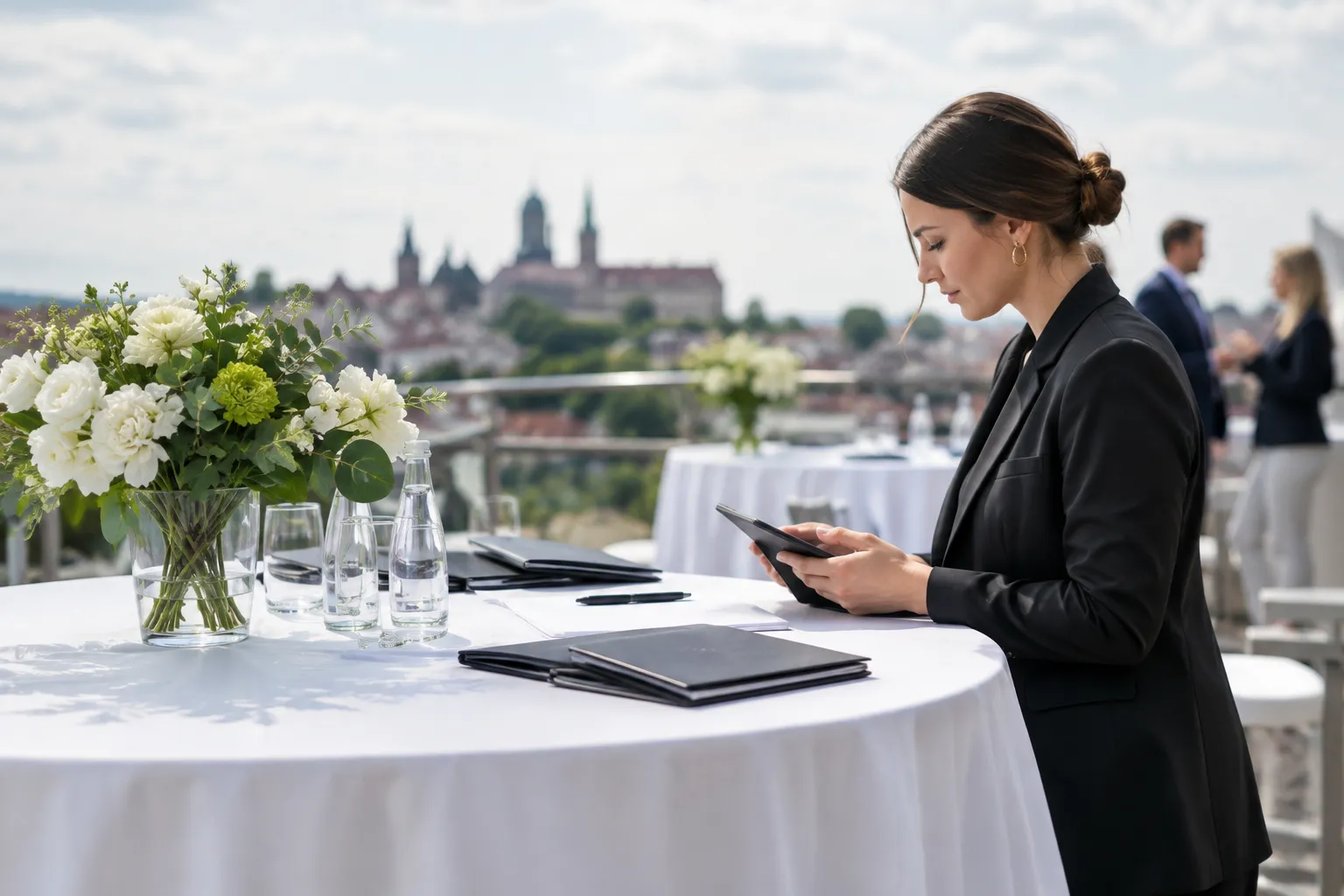
Choosing business event planners for an event in Poland is less about finding a name on a list of top companies in event management and more about finding a team whose scope fits your audience, location and internal capacity. The right partner should make it clear who is coordinating each part, how updates will work and what happens when requirements change.
For an international company entering the Polish market, compare local coordination, English-language communication, supplier management and delivery ownership before choosing between an event agency, an in-house team or remote support.
Business event planners in Poland: compare your options

Use the same criteria for every option. The table is a starting point for your own conversations, not a ranking: responsibilities and capabilities depend on the people and scope involved.
| Option | Local coordination | English-language communication | Supplier knowledge | Guest research | Delivery accountability | Internal workload |
|---|---|---|---|---|---|---|
| Local event agency | Can coordinate locally in Poland, subject to agreed scope | Confirm who will communicate with your international team | Ask how venue and supplier selection will be handled | Clarify whether research is included | Agree who owns each task and event-day decision | Can reduce the coordination work retained in-house |
| In-house team | Depends on staff location and existing local relationships | Uses your internal communication arrangements | May need to build or draw on local supplier relationships | Can be led internally or assigned externally | Internal team retains responsibility unless work is delegated | Can be demanding when planning sits alongside normal duties |
| Remote planner | Coordination approach depends on local presence and partners | Confirm meeting times, language and response process | Ask who will manage local supplier conversations | Check who gathers and interprets guest needs | Define the handover and on-the-ground decision-maker | Work may remain with your team where local tasks are not covered |
A useful decision rule is to start with the event’s most demanding needs. If venue visits, supplier coordination or on-site decisions are central, ask how each option will cover those tasks in Poland. If the event is straightforward and your team already has local contacts, in-house or remote planning may be a better fit.
Searches for business event management companies, event management top companies or event organisation companies can help you build a shortlist. But labels alone do not show whether a provider will cover guest research, supplier coordination or delivery on the day. Compare the proposed work, not just the company description.
What local coordination adds to an event in Poland

A local team can take responsibility for coordinating work on the ground, but “local” should not be treated as a complete scope by itself. Ask which activities the planner will handle, who will be your English-language contact and which decisions still need approval from your team.
For a Poland-based event, local coordination may include working through venue options, coordinating supplier conversations and aligning practical details with the event schedule. To assess the fit, ask prospective business event planners:
- Who will liaise with venues and suppliers, and in what language?
- Which tasks will be handled on site, and which require our team’s input?
- Who is the named contact for changes, and how will we receive updates?
- Who will be present during set-up and the event itself, if on-site support is included?
- What is the escalation route if a supplier or requirement changes?
Do not assume that every event agency includes the same services. One proposal may cover planning and event-day coordination; another may focus on selected tasks. Ask for responsibilities to be written down so that handovers, approvals and outstanding decisions are visible.
Guest research can also shape the brief. A planner may help you understand who you are inviting, what information you need to gather and how those findings should inform the event format. If research or communications are important to your launch, review the scope of guest research and event PR in Poland and ask what activities are included.
The practical value of a local partner is clearest when your team needs local coordination but wants to retain control of the business purpose, key messages and approvals. Agree that division early. It keeps the planning process from becoming a stream of unassigned questions.
Match the planning support to your event and audience

The format affects what the planner needs to coordinate. A conference, a partner gathering and a market-entry launch may all bring business guests together, but they put different demands on the programme, venue and guest experience. Share the audience and purpose before comparing proposals from event organisation companies.
Conferences and partner events
For a conference, compare how each provider will coordinate the programme, venue requirements, attendee information and supplier timings. Ask how changes to speakers, sessions or guest numbers will be communicated and who will keep the running plan current.
Partner events need a clear view of who is attending and why. A guest list can include existing partners, potential contacts, local stakeholders or colleagues from different markets. Discuss what information should be collected before the event, how invitations and follow-up will be handled, and which decisions your team must approve.
If your format involves a larger programme or multiple sessions, explore the scope of conferences and congresses in Poland. Use the same comparison questions across providers: who owns the programme, who coordinates suppliers and what support is planned on site?
Launches, galas, and business dinners
A market-entry launch needs a brief that connects the event format with the market and audience you are trying to engage. Be specific about the role of the event: for example, introducing your company, bringing local business contacts together or explaining a new offer. These are planning aims, not guaranteed outcomes.
The guest profile can influence the venue, programme, invitation approach and level of formality. Ask how the planner will use your audience information to shape the event and whether guest research or event PR is part of the proposed work.
A gala or business dinner may call for a different balance of hospitality, timing and guest communication than a launch reception. Compare the proposed format against your purpose and guest expectations, and check which decisions remain with your team. For those formats, see corporate galas and business dinners. For a launch focused on entering the Polish market, review market-entry events in Poland.
Questions to test an agency’s plan and accountability

A proposal should make it possible to see what happens next, not just describe a broad idea. Before committing, check whether the planner can explain the timeline, communication rhythm and ownership of decisions in plain language.
Scope and timetable
Ask:
- What work is included from briefing to event day?
- What are the next planning milestones, and when will we review them?
- Which decisions or materials do you need from us, and by when?
- How will you show progress between meetings?
- What is outside the proposed scope?
A clear timeline should identify upcoming actions and the person responsible for each. If your requirements change, ask how the change will be recorded, assessed and reflected in the plan. This matters whether you are comparing an event agency with an internal team or a remote planner.
Communication and problem-solving
Set expectations for who initiates updates, how often you will meet and how quickly routine questions should receive a response. Ask for the named day-to-day contact and the person to involve if a decision is delayed or a problem needs escalation.
You can also test how the planner handles uncertainty: “If our guest numbers or event format change, what steps will you take, and what will you need from us?” A useful answer should describe a process, including how options and consequences will be presented, rather than implying that changes will never happen.
Suppliers, guests and event-day ownership
Ask who will source or coordinate venues and other suppliers, how options will be compared and who confirms bookings. Request clarity on supplier communications, approval points and how the team will manage schedule changes.
For guest research, establish the purpose, the information to be gathered and how it will inform the event plan. For event-day delivery, clarify who will be on site, what they will oversee and who makes decisions if the schedule or arrangements need to change.
Budget visibility
Rather than comparing a single total without context, ask each provider to explain what the proposed scope covers, which costs are estimated or confirmed, and how changes will be approved. Make sure you understand what your organisation will pay suppliers directly, if applicable, and what reporting or updates you will receive.
This makes proposals easier to compare and helps prevent gaps between the planning fee, supplier arrangements and the work your own team is expected to do.
Choose the right partner for your Poland event

Choose local agency support when the event requires substantial coordination in Poland and your internal team needs a clear handover of planning tasks. In-house planning may suit a smaller or more familiar event when staff have time, decision authority and the necessary local contacts. Remote planning can fit when its scope clearly covers the work that must happen locally and there is an agreed person to manage on-site decisions.
Before you decide, rate each option against four questions:
- How complex is the programme, and how likely are requirements to change?
- How much local venue and supplier coordination is needed?
- What does the audience need from the event, and is guest research important?
- How much planning work can your team realistically retain?
Then compare proposals against the same scope. Look for named responsibilities, a usable timeline, a communication process, clear approval points and an event-day plan. If any of these are unclear, ask for a revised outline before deciding. The point is not to find a universally “best” provider, but to select the approach that matches the event and the capacity of your team.
Recommended next steps
Write a one-page brief with your event purpose, audience, likely date, location and planning tasks you want to hand over. Use it to ask shortlisted business event planners for a scope, timeline, communication plan and clear division of responsibilities.
Plan your Poland event
Share your event purpose, audience and planning needs with EVERITUM to discuss a suitable approach to a market-entry event in Poland.


Agnieszka brings nearly 20 years of experience in marketing, communications and event management. At EVERITUM, she combines strategic brand thinking with practical event expertise to help international companies connect with their audiences in Poland through conferences, corporate galas and launch events. An Executive MBA graduate of WSB Merito in Poznań, she places clear communication, personal responsibility and lasting relationships at the heart of every project.